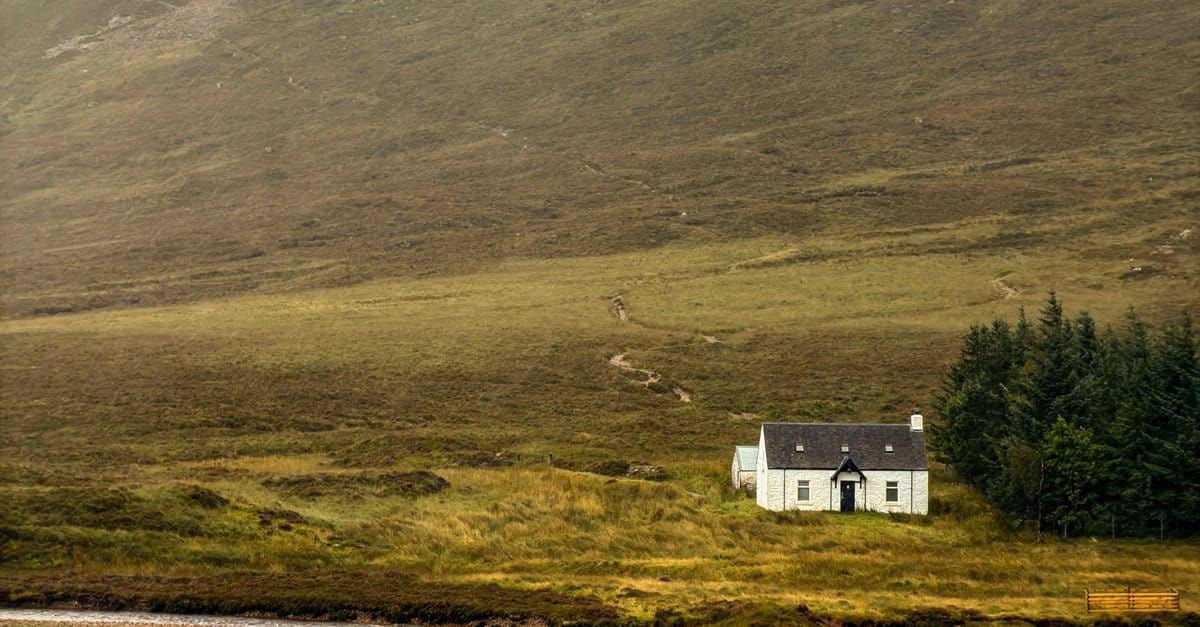
Live-in accommodation in Highland hospitality: the room that comes with the job
Photo: Nataliia Kvitovska on Unsplash
£11.10 a day, or £77.70 a week since April 2026. That's the most a room that comes with the job can count towards your minimum wage anywhere in the UK, whether it's a bothy behind the hotel or the attic over the bar.
In rural hospitality a lot of jobs come with a room, and nobody hands you the rules with the key. So here's what the law and the Fair Work Convention say about a room that comes with the job. This is the guide I wanted, for the person taking the key, the manager running the staff house and the owner paying for both, with the sources at the foot so you can check me.
The number: £11.10 a day
Minimum wage law lets an employer count accommodation towards a worker's pay, up to a cap the government calls the accommodation offset. From April 2026 the offset is £11.10 a day, or £77.70 a week. Over a year that's £4,040.40, the most a room can ever be worth to the minimum-wage sum, however fine the view.

It works both ways. If the room is free, the government's guidance says "the offset rate is added to the worker's pay" when the minimum is checked. If there's a charge, the same page puts it plainly: "the higher the accommodation charge, the lower a worker's pay when calculating the minimum wage." For a new starter: find the accommodation line on your first payslip and check your hourly rate still clears the minimum once it's taken off.
A room that comes with the job goes with the job
The second thing to know is what the room is, in law.
Private renting in Scotland is governed by the Private Housing (Tenancies) (Scotland) Act 2016. Its Schedule 1 is the list of lettings the Act leaves out, and you might expect employers' housing to be on it. It isn't. The Act doesn't exclude a room provided with a job; it never reaches one, because a room you hold as a condition of your job is a service occupancy, and a service occupancy is not a tenancy. A private tenant's protections don't come with the key. Shelter Scotland's guide to a home that comes with your job is the plainest page on it; read it before you sign anything.
So, three questions before you take the key. What does the room cost, on the payslip, a week? What is it written down as, and is it written down at all? And what happens to the room the week the job ends, in either direction?
What the Fair Work Convention found
In 2024 the Fair Work Convention published its inquiry into Scottish hospitality, and tied housing got a recommendation of its own, the ninth. The finding was blunt on both sides: significant cost to the employer, and "clear fair work issues for the worker". The two it named were security and voice. A room tied to a job creates issues around the security of the home, and may act as "a barrier to effective voice".
Anyone who has worked a floor knows what that means. Nobody tells the GM the rota's wrong when the GM holds the key to their bed. The complaint that doesn't get made about the room is the one that doesn't get made about the hours, and a team that has stopped telling you things is a room about to go wrong.

If you run a staff house, the Convention's two words are your checklist. Security: an agreement in writing; a charge on the payslip, not in a jar; notice on the room at least as long as notice on the job. Voice: someone to raise a room problem with who isn't the person writing the rota, and a day off that can be spent away from the staff house.
For the owner: the bed is the staffing question
Who pours the dram and where they sleep is one question, and I wrote the long version of it in my first essay, Who Will Pour the Dram? Staff, Visas and Highland Beds. The part of that question that got easier is hiring Irish citizens, who need no visa and no sponsor; I wrote that guide last week. An Irish hire still needs a bed.
A room is the reason a good hire says yes to a Highland winter. It is also, the Convention says, a significant cost, and a duty that runs past the end of the shift.
The owner's three questions: what the room costs you, fully loaded, against the hire you'd lose without it; whether the agreement is written so both of you could read it to a stranger; and whether the people sleeping in it would tell you if something was wrong.
Before you take the key
- The offset: £11.10 a day, £77.70 a week. Find the line on the payslip.
- What the room is written down as. A service occupancy is not a tenancy.
- What happens to the room when the job ends, and how much notice.
- Who you talk to about the room, if it isn't the person who does your rota.
- Shelter Scotland's guide, read before you sign.
If you've lived in on a Highland job: what's the one thing you wish you'd asked before you took the key? Tell me in the comments on LinkedIn, or hit reply if this came to you by email.
New here? My Monday stories and Thursday craft notes can come straight to your inbox: subscribe free.
Wednesday: ten drinks, every one costed.
References
- HM Government (2026) National Minimum Wage and Living Wage: accommodation. Available at: gov.uk (Accessed: 21 October 2026).
- Fair Work Convention (2024) Fair Work in the Hospitality Industry: Inquiry Report, executive summary and Recommendation 9. Available at: fairworkconvention.scot (Accessed: 20 October 2026).
- Scottish Parliament (2016) Private Housing (Tenancies) (Scotland) Act 2016 (asp 19), Schedule 1. Available at: legislation.gov.uk (Accessed: 20 October 2026).
- Shelter Scotland (2026) Your rights if your home comes with your job. Available at: scotland.shelter.org.uk (Accessed: 20 October 2026).
- Murray, C. (2026) 'Who Will Pour the Dram? Staff, Visas and Highland Beds', ciaran-murray.com, 1 October. Available at: ciaran-murray.com.
- Murray, C. (2026) 'An Irish citizen's first week in Scottish hospitality', ciaran-murray.com, 21 October. Available at: ciaran-murray.com.
https://www.ciaran-murray.com/live-in-accommodation-highland-hospitality/ · 27 October 2026 · Ciaran Murray
Read next
-
People & Craft · · 5 min read
Snap-Apple Night: a Halloween run-sheet from Cork
A tub half-full of water in the middle of a kitchen floor in Blarney, and the apples floating in it. That's Halloween, written down in 1938.
-
People & Craft · · 5 min read
Ten drinks. Every one costed.
The fortieth Dingle Bay Fizz on a Saturday has to taste like the first. It also has to cost the same. Here's the list a bar can run, every drink costed.